
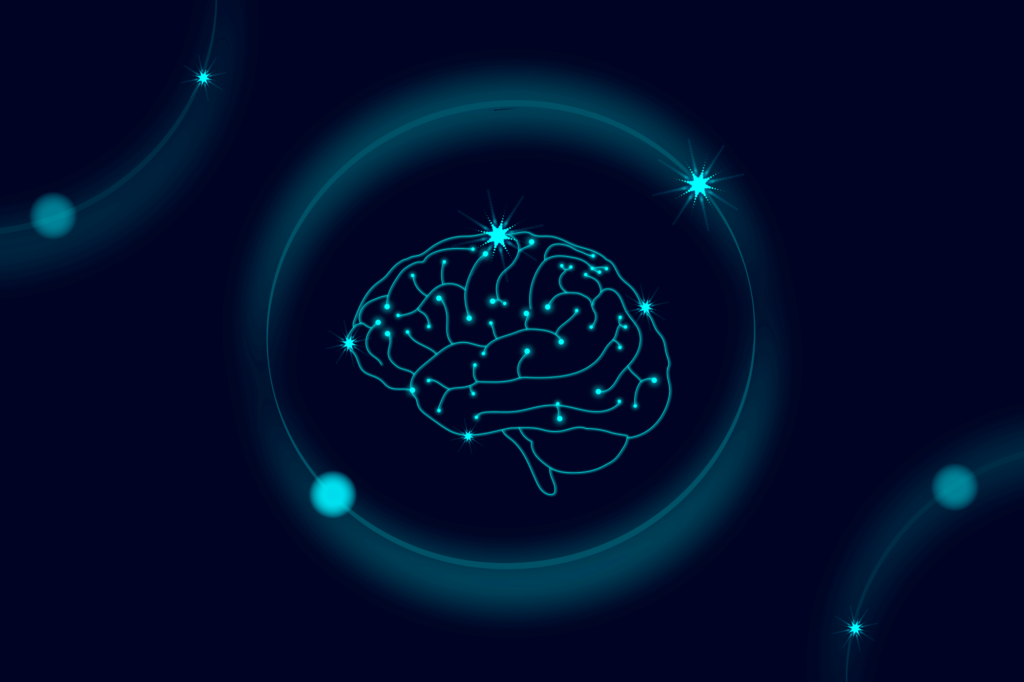
Have you ever wondered how my brain works when I’m solving a problem, remembering something important, or making a decision? The brain does not function like a machine with separate buttons for each task. Instead, it operates as a highly interconnected system where multiple areas work together at the same time. Understanding how my brain works requires looking at cooperation, not isolated parts.
How My Mind Works as a Connected System
My brain does not have a single region responsible for one specific function. When I see, think, or remember, several brain regions activate simultaneously. Vision, memory, attention, and decision-making constantly interact. This is why complex thinking feels seamless even though many processes are happening at once.
How Scientists Study How My Brain Works
Scientists study how my brain works without directly looking inside it by using a “black box” approach. They observe inputs such as sensory information and outputs such as behavior. Cognitive psychology plays a major role by analyzing mental processes through observation and experimentation. Modern neuroscience adds brain imaging and data from people with brain injuries to further explain how my brain works.
EEG: Measuring Brain Activity Over Time
One of the most common tools used to understand how my brain works is the electroencephalogram, or EEG. EEGs measure electrical activity on the surface of the brain. They provide excellent timing information and help identify brain states, although they lack precise spatial accuracy.
PET Scans and Brain Activity
Positron emission tomography, or PET, uses radioactive tracers to measure blood flow in the brain. Areas with increased blood flow are considered more active. PET scans help identify which regions are involved in specific tasks, though they are slower and require specialized equipment.
fMRI and High-Resolution Brain Mapping
Functional magnetic resonance imaging, known as fMRI, detects changes in blood oxygen levels to create detailed images of brain activity. This method allows scientists to map how my brain works during complex cognitive tasks with high precision, making it one of the most powerful tools in modern neuroscience.
TMS: Influencing Brain Function in Real Time
Transcranial magnetic stimulation, or TMS, uses magnetic pulses to temporarily stimulate or inhibit specific brain regions. By observing how behavior changes when a region is affected, researchers gain insight into how my brain works without invasive procedures.
Why the 10 Percent Brain Myth Is Wrong
Neuropsychology clearly shows that humans do not use only ten percent of their brains. Studies of brain damage reveal that every region has an important role. When any area is impaired, specific cognitive or physical functions are affected, proving that the entire brain is actively involved in how my brain works.
The Central Nervous System Explained
My brain works together with the spinal cord as part of the central nervous system. This system controls both automatic functions, such as reflexes, and higher-level thinking processes. Understanding this structure helps explain how information travels and is processed in the body.
The Four Brain Lobes and Their Roles
The cerebral cortex is divided into four lobes that contribute to how my brain works. The frontal lobe supports planning, decision-making, and control. The parietal lobe processes sensory information and spatial awareness. The temporal lobe plays a key role in memory and sound processing. The occipital lobe is responsible for vision. These regions constantly communicate rather than working in isolation.
How Neurons Make My Brain Work
At the cellular level, my brain works through neurons. Neurons transmit electrical impulses that allow information to flow through the brain. Their structure and connections form networks that adapt over time, explaining how learning and experience change how my brain works.
Thinking, Blood Flow, and Brain Resources
When I engage in intense thinking, my brain requires more resources. Increased cognitive effort leads to increased blood flow to active brain areas. Reaction time also improves with stronger stimuli, following Pieron’s Law, showing that my brain responds gradually rather than in a simple on-off manner.
The Sensory Homunculus and Brain Plasticity
The sensory homunculus represents how my brain allocates space to different body parts based on sensory importance. Hands and lips receive more brain area than less sensitive regions. These representations can change with practice, highlighting the brain’s adaptability.
A Real Example of How My Brain Works
When I solve a challenging puzzle, multiple brain areas activate at the same time. Memory retrieves past experiences, visual regions process spatial information, and frontal areas plan strategies. All of this happens simultaneously, demonstrating how my brain works as a coordinated system.
Putting the Science into Context
To further strengthen the text, I would add several complementary sections that connect scientific explanations with everyday experience and a practical “mind-hacking” perspective.
Real-Life Implications of Brain Function
A section explaining how the described brain mechanisms appear in daily life. This would clarify why intense thinking causes mental fatigue, why multitasking reduces performance, and why human reactions are gradual rather than instant. The goal is to translate abstract neuroscience into relatable experience.
The Brain as a Black Box System
An expanded explanation of the black box approach, comparing the brain to other complex systems such as artificial intelligence or software. This perspective emphasizes that mental processes can be understood through inputs and outputs without direct access to internal structures.
Limits of Brain Imaging and Measurement
A critical discussion of what techniques like EEG, PET, fMRI, and TMS cannot reveal. This section would address common misconceptions, such as the idea that brain scans can read thoughts, and highlight the difference between correlation and causation in neuroscience research.
From Neurons to Networks and Behavior
A conceptual bridge explaining that individual neurons are simple units, while cognition and behavior emerge from large-scale neural networks. This helps explain how learning, habits, and complex decisions arise from interconnected activity rather than isolated brain cells.
Brain Plasticity as an Adaptive System
An extension of the sensory homunculus idea, focusing on neuroplasticity as the brain’s ability to reorganize itself based on experience and practice. Examples would show how repeated actions strengthen specific neural representations, while unused functions weaken over time.
Practical Mind Hacks
A short, actionable summary translating scientific insights into practice, such as focusing on one task at a time, using deliberate practice to reshape brain networks, and understanding how stimulus intensity affects reaction speed.
Reflective Closing
A concise closing section reinforcing the idea that brain functions are highly interconnected and adaptive, encouraging the reader to view the brain not as a static organ but as a dynamic system shaped by experience.
Final Thoughts on How My Brain Works
Understanding how my brain works means recognizing that cognition is interconnected, adaptable, and measurable through scientific methods. Modern neuroscience shows that my brain is constantly changing, shaped by experience, learning, and interaction with the world.
Pingback: Selective Attention Why You Miss What’s Right in Front of You